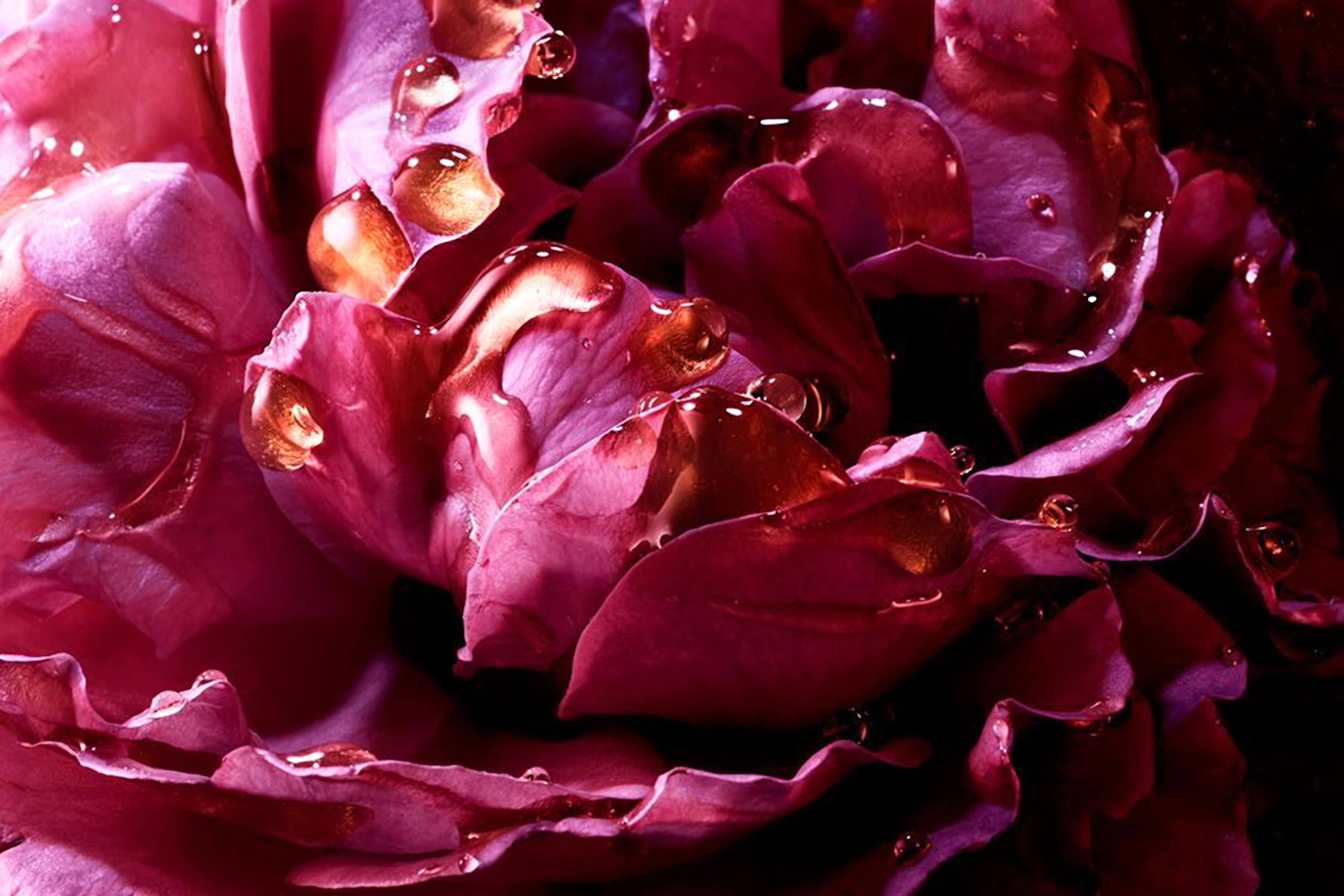
Some raw materials follow trends; others transcend them. The Bulgarian rose belongs to the latter category. For centuries, it has been one of perfumery’s most precious ingredients, yet its value rests on far more than its olfactory qualities. It is the result of a rare balance between botany, climate, artisanal expertise and scientific research, a heritage that continues to make Bulgaria the world’s leading reference for the production of Rosa damascena essential oil.
Its history began long before the perfume industry existed. Rosa damascena, also known as the Damask rose, probably reached the Balkans along the trade routes of the Ottoman Empire before finding an exceptional habitat in the valley between the Balkan Mountains and the Sredna Gora range. Stretching for just over one hundred kilometres, this area is now known as the Valley of Roses.
Here, nature creates conditions that are difficult to reproduce elsewhere. The mountains protect the crops from the strongest winds, spring rainfall provides the necessary humidity, and the alternation of warm days and cool nights encourages the formation of aromatic molecules within the petals. This microclimate directly affects the quality of the essential oil and explains why the same variety produces different results when grown in other regions.
The harvest takes place between late May and the first half of June and lasts only a few weeks. Each working day begins before dawn, not for the sake of tradition or atmosphere, but out of necessity. The most volatile aromatic molecules reach their highest concentration during the coolest hours, while rising temperatures cause some of these compounds to evaporate, reducing the yield and altering the olfactory balance of the raw material.
The flowers are picked by hand and transported to the distilleries almost immediately. Any delay accelerates oxidation and fermentation, compromising the quality of the finished oil. The speed of the supply chain is therefore as important as the cultivation process itself.
The flowers are transformed through steam distillation, a method that has remained surprisingly similar over the centuries. Steam passes through the petals, releasing their aromatic substances, which are then condensed and separated from the floral water. The yield is extremely low: producing a single kilogram of essence requires between three and four thousand kilograms of fresh flowers. This is one of the reasons why Bulgarian rose oil remains among the most valuable natural ingredients in perfumery.
Its complexity, however, is not determined solely by the quantity of petals required. The essential oil contains hundreds of aromatic molecules. Among the most important are citronellol, which brings floral freshness; geraniol, which adds radiance and roundness; nerol, with its subtle citrus nuances; and phenethyl alcohol, which captures the truest character of the freshly picked flower. Alongside these, dozens of minor compounds create the olfactory depth that makes the essence virtually impossible to reproduce in a laboratory.
It is this chemical balance that has made Bulgarian rose one of the favourite ingredients of master perfumers, who use it for far more than its floral character. It can add volume to a composition, connect contrasting raw materials, extend a fragrance’s longevity and accompany its evolution on the skin. This is why it continues to play a central role in contemporary perfumery, where it is combined with ingredients far removed from its traditionally romantic associations, including oud, leather, incense, patchouli, saffron, resins and smoky woods.
The way the rose is interpreted has also evolved over time. Once associated almost exclusively with a delicate and feminine aesthetic, it is now regarded by perfumers as an extraordinarily versatile material: luminous or dark, fresh or spicy, velvety or mineral. In many contemporary fragrances, its presence is not immediately recognisable. Instead, it works beneath the surface, shaping the structure of a composition rather than defining its most obvious character.
Scientific research has further expanded interest in the flower. Rose petal extracts are rich in polyphenols and flavonoids, substances known for their antioxidant properties. Rose water, used for centuries in the cosmetic traditions of the Middle East and Eastern Europe, continues to be valued for its soothing qualities. The essential oil is also used in skincare, always in carefully controlled concentrations because of its exceptional aromatic potency.
Its importance, however, extends far beyond the finished product and involves an entire region. Every spring, thousands of people take part in the harvest, while the Rose Festival celebrates an activity that remains a significant part of Bulgaria’s cultural identity. This is not simply an agricultural crop, but a body of knowledge passed down through generations, made up of gestures, rhythms and expertise that technology cannot easily replace.
For this reason, protecting its origin has become increasingly important. A certification system guarantees provenance and quality, preserving the connection between the raw material and the territory in which it is produced. At a time when ingredient traceability matters more than ever, knowing where a material comes from also means understanding its cultural, environmental and economic value.
Today, sustainability represents one of the most complex challenges facing the industry.
Climate change is altering the balance of the seasons, while growing international demand makes it essential to protect both biodiversity and local expertise. Preserving the quality of Bulgarian rose oil means safeguarding an ecosystem, an agricultural supply chain and a tradition that remains one of the country’s most recognisable forms of heritage.
More than three centuries after its cultivation began in the Valley of Roses, Rosa damascena remains one of the rare examples in which the quality of a raw material, the characteristics of its place of origin and human expertise are inseparable. More than its reputation alone, it is this combination that secures its central role in contemporary perfumery and continues to make Bulgaria a reference that is difficult to replace.


