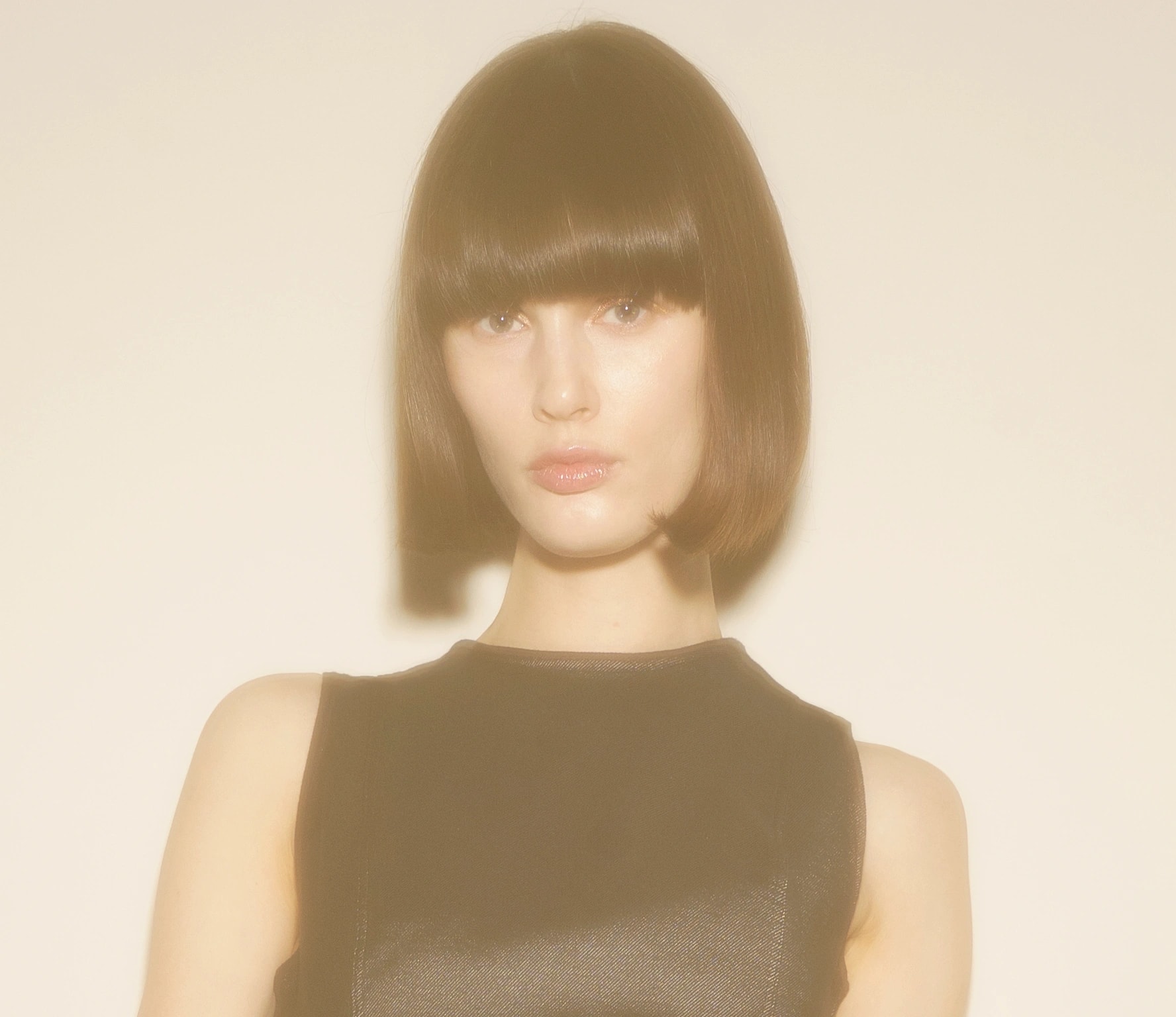
Every era rewrites its own ideal of beauty. Some periods favour ornament, while others pursue precision. There are moments when the face becomes a surface for accumulation and others when every element is reduced to its essence. Summer 2026 belongs to the latter direction. It does not mark a return to minimalism, but the emergence of a more measured aesthetic, in which form and light once again become the primary means of expression.
In recent years, beauty has multiplied its interventions. Increasingly elaborate skincare routines, contouring, fillers, extreme lashes, meticulously shaped eyebrows and make-up designed for the smartphone lens have transformed the face into a surface to be perfected. Technique itself became an aesthetic element, often as visible as the effect it was intended to create.
Today, the language is changing. Technical sophistication has not diminished, but it has become less conspicuous. Precision remains, while the need to display it disappears. The result looks more natural, despite being created with the same degree of care. This transformation is taking place across the entire industry, from hairstyling to make-up.
Two trends represent this shift more clearly than any others: the return of the bob and the rise of golden make-up.
The bob is one of the few haircuts to have travelled through more than a century of history without losing its relevance. First appearing in the early twentieth century, it became a symbol of the 1920s, when many women shortened their hair at the same time as the hems of their skirts. The gesture signalled a change that extended far beyond fashion. The bob accompanied a new idea of femininity, freer in its movement and less constrained by the aesthetic codes of the past.
In the 1960s, Vidal Sassoon completely rewrote its language. He eliminated backcombing and rigid constructions, allowing the form to depend entirely on the precision of the cut. For the first time, the haircut itself, rather than daily styling, determined the balance of the hairstyle. It was a principle that would influence generations of hairdressers.
The bob returning today draws directly on that lesson. Clean lines, controlled lengths and carefully calibrated volumes enhance the structure of the face without relying on dramatic effects. Its form is created through proportion, not artifice.
While the bob defines form, make-up works with light.
Gold has accompanied the history of beauty for thousands of years. In ancient Egypt, it evoked the sun and eternity; in Byzantine art, it became a symbol of the sacred; Hollywood cinema transformed it into an emblem of glamour. Today, its meaning is changing once again. Rather than communicating wealth or theatricality, it brings luminosity to the face through discreet reflections.
From an optical perspective, metallic pigments interact with light differently from matte powders. Reflective particles increase perceived luminosity without altering the volumes of the face. This is why shades of champagne, honey, bronze and pale gold illuminate the eyes naturally, creating depth without weighing down the make-up.
The rest of the face follows the same principle. Skin retains its natural texture, eyebrows are groomed without becoming rigid, and lips remain close to their own colour. Attention is not distributed across every detail, but concentrated on a few carefully chosen points that define the overall balance of the face.
It is no coincidence that this pursuit of the essential also finds a parallel in fashion. The Spring/Summer 2026 collections favour clean silhouettes, luminous surfaces and rigorous construction, reducing decorative elements in order to emphasise the quality of materials and proportions. Beauty and fashion therefore return to a shared principle: removing the superfluous to reveal what truly matters.
The year 2026 does not introduce an entirely new aesthetic. Instead, it redefines the very idea of sophistication. Quality is no longer measured by the number of interventions, but by their precision. Technique remains fundamental. It simply no longer needs to be seen.


